The 10-year yield hit 5 per cent before the Fed's decision, not after. Here is what that really signals.
Monthly Digest No. 69 End of September 2026
The Signal
Mechanics & Mindset for Financial Freedom
1) MARKET BAROMETER - The Bond Market Got There First
The Market Barometer takes the market's temperature once a month, away from the daily noise. Not to predict what comes next, but to know where we stand in the cycle, on the long road to Financial Freedom.
Noise: The Fed raised interest rates for the first time in three years, and headlines treated it as September's big event.
Signal: Look at the date, not just the decision. The real move happened before the headlines did: the bond market had already priced in higher rates well before the Fed's meeting, and central banks spent the month confirming a shift bond investors had already made on their own. The how is below.
How September worked
1
Expensive oil keeps inflation stuck above target. Brent rose 14 per cent, and fuel costs feed straight into the inflation figures central banks watch.
2
The bond market moves first. The 10-year Treasury yield was already near 5 per cent by 15 September, a day before the Fed even met, up from 4.73 per cent at the end of August.
3
Central banks confirm what bonds had already priced in. The ECB, the Fed and the Bank of Japan all raised rates within ten days of each other, and the yield moved by one hundredth of a point on the Fed's own decision day.
4
Yields keep climbing anyway. Sticky inflation data pushed the 10-year yield from 4.96 to 5.29 per cent in the final stretch of the month, more than the hikes themselves had.
5
The dollar strengthens, and gold and most stocks fall. The euro fell 2.2 per cent, gold fell 6 per cent, and three in four S&P 500 stocks fell even as the index barely moved.
My takeaway for September
A year ago, investors were pricing in rate cuts. By September they were pricing in a longer stretch of higher rates. The one asset that did not get the memo is bitcoin, which rose 6 per cent while gold, moved by the same rate logic, fell by the same amount. For me, the lesson is that this is a turning point in the cycle, and the 10-year Treasury yield, this cycle's real voting machine, cast the first vote, days before the Fed did. Central banks vote only a handful of times a year, and in September theirs mostly confirmed what the market had already decided.
Market dashboard30 September 2026
S&P 500
7,652
−0.5% mo+11.8% YTD
MSCI World*
4,910
−1.3% mo+10.8% YTD
Bitcoin
$83.6K
+6.1% mo−4.4% YTD
Gold (spot)
$4,166/oz
−6.2% mo−4% YTD
VIX*
16.0
+1.6 pt moYTD n/a
10-year yield
5.29%
+0.56 pt mo+1.12 pt YTD
EUR/USD
1.134
−2.2% mo−3.5% YTD
Oil (Brent)
$103.5/bbl
+14.0% mo+70% YTD
* Approximate, official 30 Sep close pending.
Oil: where the chain starts
Brent crude, the global benchmark, rose 14 per cent to about $103.50 a barrel, its biggest monthly jump since July. WTI, the US benchmark, closed at $90.40. Crude itself is flowing again through the Strait of Hormuz, the narrow waterway that normally carries about a fifth of the world's oil. What is short is refined fuel, as US diesel and petrol stocks keep shrinking. Talks between Washington and Iran stalled, and President Donald Trump denied any plan to ease sanctions. Oil for delivery in later months trades in the high $90s, so traders expect the squeeze to ease. Until it does, fuel costs pass straight into transport, airfares and the inflation figures.
Inflation: why central banks could not wait
In the US, the PCE price index (the Fed's preferred inflation gauge, a cousin of the consumer price index we quoted last month) showed prices up 3.4 per cent in the year to August. The core measure, which leaves out food and energy, was 3.0 per cent. Both beat expectations, and both remain well above the Fed's 2 per cent target. Europe is moving the wrong way. Germany, France, Italy and Spain all reported September inflation above forecast, with Spain at 5 per cent. Savings that pay less than the inflation rate lose purchasing power.
Central banks: the response
The European Central Bank (ECB) moved first. On 10 September it raised its deposit rate, the benchmark for borrowing costs in the euro area, to 2.50 per cent. The US Federal Reserve followed on 16 September with a quarter point rise to a range of 3.75 to 4 per cent. It was the Fed's first increase since July 2023, and the vote was unanimous, 12 to 0. Kevin Warsh, the Fed chair who succeeded Jerome Powell earlier this year, said inflation has stayed too high for too long, and most officials expect one more hike this year. The Bank of Japan followed two days later, lifting its rate to 1.25 per cent, the highest since 1995. Late in the month, a more cautious speech by John Williams, president of the New York Fed, cut the odds of an October hike below 50 per cent. In central bank slang, he sounded dovish, meaning more inclined to keep rates low. Bond investors had largely priced in all three hikes beforehand, which is one reason none of them moved yields much on the day. Deposits now pay more, and new loans and mortgages cost more.
Bonds: the market moves first
A bond pays a fixed amount of interest. When new bonds start paying more, older bonds paying less lose appeal, so their price falls until their yield matches the new rate. Investors did not wait for a central bank to confirm this: reading the same inflation data as the Fed, they concluded rates would stay higher for longer, and started selling bonds on that expectation well before either meeting took place. September showed this working a step ahead of schedule. The 10-year Treasury yield was already near 5 per cent on 15 September, a day before the Fed's decision, up sharply from about 4.73 per cent at the end of August. The hike itself barely moved it further, by one hundredth of a point. Most of the month's jump came later anyway, as the yield climbed from 4.96 to 5.29 per cent in the final stretch of September on sticky inflation data rather than any single announcement. The 30-year passed 5.6 per cent, the highest in more than two decades, and Japan's 30-year yield set a record on 1 September. Bonds are meant to be the calm part of a portfolio. This month, existing bond funds lost value, while new buyers locked in the best yields in almost twenty years. Mortgage rates are priced off the 10-year yield, so they rise with it.
The dollar: money goes where it is paid
All three central banks raised rates, but US rates remain the highest, so money moved into dollars. The euro fell 2.2 per cent to about $1.134, near its weakest since May 2025. The effect cuts both ways in Europe. US shares held by euro based investors are worth more in euros, while oil, priced in dollars worldwide, costs more euros per barrel.
Gold: insurance meets a rival that pays
Gold pays no interest. When a 10-year Treasury pays about 2.9 per cent above inflation, holding gold means giving up that income. A stronger dollar also makes gold pricier for buyers outside the US. Both forces hit at once. Spot gold, the price for immediate delivery, fell about 6 per cent to roughly $4,166 an ounce, handing back most of August's bounce. It is down about 4 per cent for the year and about a quarter below its January record above $5,600.
Stocks: a calm index, a restless crowd
Higher yields hurt shares in two ways. They raise companies' borrowing costs, and they make future profits worth less today, because a safe bond now offers a decent alternative. The damage was uneven. Utilities and real estate, which borrow heavily and pay steady dividends that compete with bond interest, fell about 6 per cent, as did consumer companies selling non-essentials. Smaller companies, which tend to carry more floating rate debt, sit close to 10 per cent below their August peak on the Russell 2000 index. Technology, carried by AI demand and cash rich balance sheets, rose about 5 per cent.
The S&P 500 is weighted by company size, so a handful of tech giants held it at 7,652, down only 0.5 per cent and still almost 12 per cent up for the year, while three in four of its members fell. The Dow Jones Industrial Average, an index of 30 old guard blue chips, lost 4.3 per cent. The technology heavy Nasdaq gained 1.9 per cent. Same country, same month, different planets.
S&P 500, one-month performance to 30 September 2026
The world: no refuge abroad
The chain was global, so spreading money across countries offered little shelter. The MSCI World index, which covers large and mid sized companies in 23 developed countries, lost about 1.3 per cent to around 4,910. Europe's STOXX 600 fell about 2.5 per cent, its first monthly loss in six, and London's FTSE 100 had its worst month since March.
Bitcoin: the exception
Bitcoin is the one major asset this chain does not explain. It rose about 6 per cent to roughly $83,600, completing a 43 per cent quarter, its best third quarter since 2017. Rising yields did catch up with it briefly, pulling it back from roughly $87,000 in mid September. It remains about 4 per cent down for the year and a third below its late 2025 record above $126,000. Bitcoin still trades on its own flows and mood, which is why gold and bitcoin, both called alternatives, moved in opposite directions.
VIX: the fear moved house
The VIX, the fear index that measures expected swings in US stocks, ended around 16, up from 14.4. The stock market stayed calm. The bond market did the screaming.
On the calendar: the US jobs report and eurozone inflation on 2 October, the Fed on 28 October, the ECB on 29 October.
2) SWEAT YOUR ASSETS - QUOTES OF THE MONTH
On balance
We buy stocks so we can eat well, but we buy bonds so we can sleep well.
Investment adage
On yield
Buying a bond only for its yield is like getting married only for the s*x.
Jason Zweig, Wall Street Journal columnist, in his commentary to Benjamin Graham's The Intelligent Investor
3) SWEAT YOUR ASSETS - BLOG POSTS
One book review this month, about money that never reaches a stock market.
Confessions of a Microfinance Heretic: Book Review
Microfinance means small loans and savings for people whom banks overlook. Hugh Sinclair, a development finance consultant with over two decades in the sector, shows how a good idea became an industry with perverse incentives. I read it as a love letter with tough love attached. Its warning travels well beyond microfinance: ask for evidence before the money moves.
Two views from people who manage other people's money for a living.
The Hardest Thing I've Ever Seen in Investing — Howard Marks
Howard Marks, co-chairman of the investment firm Oaktree and author of The Most Important Thing, has invested for sixty years. He calls today's market the hardest he has faced, because the uncertainty around AI cannot be settled by analysis. He walks through three ways to hold AI exposure and how to size each one, then turns to private credit, which grew from nothing in 2010 to $1.7 trillion.
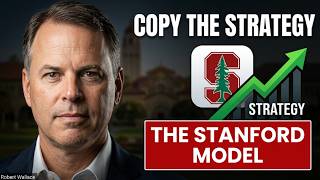
Why You Can't Copy Stanford's Portfolio—But You Can Copy Its Strategy
An endowment is a pool of donated money, invested so a university can be funded for good. Robert Wallace has run Stanford's, worth about $40 billion, since 2015, and spent 16 years as a professional ballet dancer before finance. He sets out the three pillars behind it, strategy, execution and governance, and a 5 per cent annual payout that funds 22 per cent of the university's operating budget.
A plain-English read on where markets stand and why — the Market Barometer — plus three quotes worth keeping, and the best from the blog, podcast and YouTube. Issue 68 and counting.
We use technologies like cookies to store and/or access device information. We do this to improve browsing experience and to show (non-) personalized ads. Consenting to these technologies will allow us to process data such as browsing behavior or unique IDs on this site. Not consenting or withdrawing consent, may adversely affect certain features and functions.
Functional Always active
The technical storage or access is strictly necessary for the legitimate purpose of enabling the use of a specific service explicitly requested by the subscriber or user, or for the sole purpose of carrying out the transmission of a communication over an electronic communications network.
Preferences
The technical storage or access is necessary for the legitimate purpose of storing preferences that are not requested by the subscriber or user.
Statistics
The technical storage or access that is used exclusively for statistical purposes.The technical storage or access that is used exclusively for anonymous statistical purposes. Without a subpoena, voluntary compliance on the part of your Internet Service Provider, or additional records from a third party, information stored or retrieved for this purpose alone cannot usually be used to identify you.
Marketing
The technical storage or access is required to create user profiles to send advertising, or to track the user on a website or across several websites for similar marketing purposes.
The mechanics and the mindset, a plain-English read on where markets stand, and the best from the blog, podcast and YouTube. Issue 68 and counting. One email a month.